

A great brand can still lose the habit that made it great. Polaroid Business Failure was not caused by one bad product, one lazy boardroom, or one late response to digital cameras. It happened because the company loved its old profit engine more than the future its own engineers could already see. For decades, Americans knew the joy of watching a square photo appear in their hands. That magic worked at family cookouts, DMV counters, crime scenes, real estate listings, and college dorm rooms. Then the phone and digital camera changed what “instant” meant. The print was no longer the point. Sharing was. Polaroid missed that shift, but the brand did not die in the usual way. Its second life came from people who treated imperfection as the product, not the flaw. That is why this story matters for founders, marketers, and anyone studying brand comeback lessons. A business can collapse after inventing the future, then return when culture starts missing what speed removed. For deeper business visibility around comeback brands and market stories, business growth media coverage can help frame why old names sometimes find new demand.
The Brand That Made Waiting Feel Magical
Polaroid began as more than a camera company. It was a promise that science could make everyday life feel a little unreal. Edwin Land built the company around polarizing materials first, then pushed that science into photography after the famous question from his young daughter about seeing a photo right away. Yale Insights notes that Polaroid became one of America’s early high-tech success stories, founded in 1937 and later known for instant photography after Land’s breakthrough camera reached buyers in 1948.
Edwin Land sold an experience before he sold a product
The first Polaroid camera was not only about speed. It changed the social act of taking a picture. Before instant film, you had to trust a roll of film, send it away, and wait. Polaroid turned that wait into a small public event.
That mattered in the U.S. because photos were tied to proof. A family snapshot proved a birthday happened. A license photo proved identity. A real estate image helped sell a home. Yale notes that instant cameras entered consumer use as well as business uses like driver’s licenses, crime reports, and real estate advertising.
The non-obvious lesson is that Polaroid was never selling pure image quality. It was selling closure. You pressed a button and the moment became real in your palm. That feeling became the company’s moat, and later, its trap.
The SX-70 turned hardware into theater
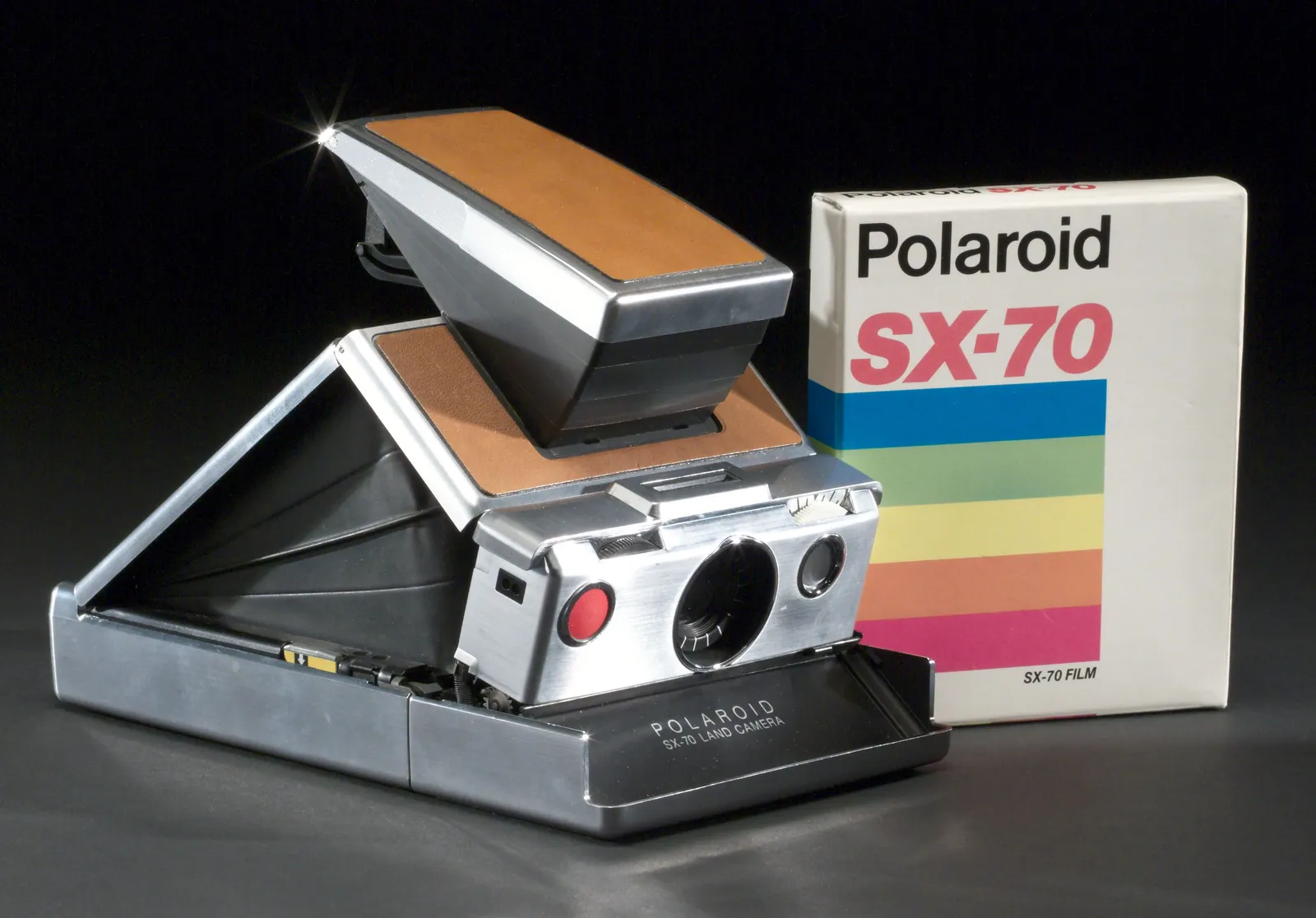
The SX-70 is still the camera many people picture when they think of classic Polaroid. It folded. It looked elegant. It made the user feel like part of the invention. Polaroid’s own support page says the SX-70 was produced from 1972 to 1981 and remains one of the brand’s best-known instant cameras.
This is where Polaroid’s strength became dangerous. The company did not build a dull commodity. It built a ritual. You opened the camera, framed the shot, heard the machine work, then watched chemistry do its slow little performance.
That ritual made the instant photography market feel protected. But rituals survive only when people still need them. Once digital screens gave users endless retakes and instant sharing, the old ritual had to become art, not utility. Polaroid took too long to see that.
Why Polaroid Business Failure Became a Business Lesson
The collapse was painful because Polaroid was not blind to technology. That is what makes the case sharper than the usual “company missed digital” story. Polaroid had worked on electronic imaging for decades. Yale reports that by 1989, 42% of Polaroid’s research and development funding was going toward digital imaging, and by the late 1990s the company was a top seller of digital cameras.
The company saw digital but protected film economics
Polaroid leaders understood cameras. They understood imaging. What they did not solve was the business model problem. Film sales carried rich margins, while digital cameras pushed profit toward hardware, software, storage, and later platforms.
That sounds obvious now. At the time, it was brutal. A company built around film chemistry had to replace the thing that paid for its labs, factories, sales teams, and identity. Yale’s account explains that former leaders believed people would still want physical prints and that the company culture favored chemistry and media over electronics.
Here is the hard part for small business owners: the profitable product often makes the new product look weak. The old thing throws off cash. The new thing looks messy. So the company delays, then calls the delay discipline.
Digital photography disruption changed the meaning of instant
Digital photography disruption did not beat Polaroid only by making cameras faster. Polaroid was already fast. Digital won because it changed the job customers wanted done. People stopped asking, “How quickly can I hold this picture?” They started asking, “How quickly can I take another, delete the bad one, and show the good one?”
That shift hurt Polaroid’s business customers too. Insurance, real estate, identification, and field reporting no longer needed instant film in the same way. Yale notes that as digital cameras spread, Polaroid lost major customers in real estate, insurance, and photo-identification work, film sales fell, and the company filed for bankruptcy in October 2001.
The counterintuitive point is that Polaroid did not fail because instant became slow. It failed because instant became cheap, editable, and shareable somewhere else. The company’s old magic still worked, but the mainstream market had changed its definition of magic.
The Revival Started Where Corporate Logic Had Quit
After bankruptcy, the Polaroid name moved through owners and licensing deals. The old company had records, patents, design history, and cultural weight, but the living instant-film business had almost vanished. Harvard Library’s Polaroid Corporation Collection states that Polaroid filed for bankruptcy protection in 2001 and that the brand name later continued through licensing and electronics marketing.
The Impossible Project treated scarcity as demand
The Polaroid revival story begins in a strange place: a factory others saw as dead. Wired reported that Polaroid decided in 2004 to stop producing the negatives needed for its instant film, believing stockpiles would last for years. Demand ran higher than expected, and by mid-2008 the material was almost gone.
Then came The Impossible Project. The group did not have the comfort of a giant old corporation. It had leftover machinery, fan demand, technical headaches, and a name that admitted the challenge. Wired described a small team at the Enschede factory in the Netherlands trying to bring instant film back after Polaroid’s shutdown.
This was not nostalgia alone. Nostalgia can make people talk. It does not make them keep buying expensive film packs. The instant film comeback worked because the product gave users something digital could not give them: one physical object with no perfect duplicate.
Imperfection became the new premium feature
Old Polaroid sold instant proof. New Polaroid sold intentional imperfection. That is a different business. A soft exposure, a strange color shift, or an unpredictable result stopped being a defect for many buyers. It became the point.
You see this with younger U.S. consumers who use digital cameras all day but still want a physical photo at a party, wedding table, road trip, or college apartment. The picture does not need to beat a smartphone on sharpness. It needs to feel kept.
The Polaroid revival story proves that a market can shrink and still become healthier for a smaller company. Mass-market dominance disappeared. A loyal culture remained. For marketers studying small business marketing case studies, that is the part worth stealing: do not rebuild the old market if the old market is gone. Build for the people who still care.
How the Instant Photography Market Let Polaroid Return
The modern instant photography market is not a return to 1978. It is a different lane inside a phone-first culture. Polaroid now competes against smartphones, Fujifilm Instax, portable printers, vintage resellers, and the simple fact that most people already have a good camera in their pocket.
The new Polaroid had to reunite product and name
The revival became more believable when the film operation and the famous name came closer together. PetaPixel reported that The Impossible Project became Polaroid Originals after the 2017 brand move, then reclaimed the Polaroid name in 2020 while launching the Polaroid Now camera.
That mattered because brand licensing had weakened the name. A famous logo can help, but only if the product matches the memory. When shoppers saw Polaroid attached to random electronics, the name felt stretched. When it returned to analog instant cameras and film, the promise became clearer.
The instant film comeback also gained from limits. Film costs money. Shots are finite. You cannot spray fifty attempts without thinking. That constraint feels odd in a digital age, but it gives the product emotional weight.
The revival works because it stopped chasing the old mass market
The smartest thing about modern Polaroid is that it does not need to beat the smartphone. It needs to sit beside it. A guest at a Nashville wedding can take phone videos all night and still treasure one square print from the reception table. A Brooklyn artist can shoot digital for work and Polaroid for mood. A teen at a beach party can want the print because it cannot be scrolled past.
That is why the instant photography market still has room for a brand that once looked finished. Polaroid’s current camera range includes models such as Go, Now, and Now+, with the official store describing Go as its smallest analog instant camera line and Now+ as a more advanced range with app-connected creative controls.
The non-obvious lesson is that a revival does not always mean becoming large again. Sometimes it means becoming specific again. Polaroid lost when it tried to defend yesterday’s mainstream habit. It returned when it served a smaller emotional need with more honesty.
Conclusion
Polaroid’s story is not a clean warning about ignoring technology. That would be too easy. The company researched digital imaging, sold digital cameras, and still lost because its deeper beliefs stayed tied to film, chemistry, and the printed record. Polaroid Business Failure shows how a strong profit model can train smart people to defend the wrong future. The revival shows the other side of the coin. A product that loses practical dominance can return as a cultural choice when it owns a feeling people still want. For U.S. founders, the lesson is plain: protect the customer’s changing desire, not the old way you served it. Polaroid became useful, then outdated, then meaningful again. That arc is rare, but not random. It came from accepting that analog photography no longer had to win on speed. It had to win on memory, touch, and restraint. Build for the real reason people care, and your brand has a better shot at surviving the next market shift.
Frequently Asked Questions
Why did Polaroid fail as a business?
Polaroid failed because its core money came from instant film while customers moved toward digital photos, screens, and sharing. The company had digital knowledge, but its culture and profit model stayed tied to prints for too long.
When did Polaroid file for bankruptcy?
The original Polaroid Corporation filed for bankruptcy protection in October 2001 after film sales dropped and digital photography changed customer behavior. The brand later passed through different owners before the modern analog-focused revival took shape.
What made Polaroid cameras popular in America?
They gave people a finished photo within minutes, which felt amazing before digital cameras and smartphones. Families, businesses, police departments, real estate agents, and ID offices all had practical reasons to use instant prints.
How did The Impossible Project help bring Polaroid back?
The Impossible Project saved the idea of Polaroid-compatible instant film after production had been shut down. It worked from the old Enschede factory, rebuilt film chemistry, served loyal fans, and later became tied to the Polaroid name.
Is Polaroid still in business today?
Yes, the modern Polaroid sells instant cameras, film, and related products. It is not the same corporate structure as the original giant, but the current company keeps analog instant photography at the center of the brand.
Why do people still buy Polaroid cameras?
People buy them because the print feels personal, limited, and physical. A smartphone photo is easier, but a Polaroid print becomes an object you can pin, gift, frame, or keep without opening an app.
What can small businesses learn from Polaroid?
A company should not confuse its current product with the deeper customer need. Polaroid’s old customers wanted instant memory and proof. Later, they wanted digital control. The revival worked by serving emotion instead of chasing old volume.
Is instant film a growing market again?
It has returned as a niche with strong cultural appeal, not as the main way people take photos. That makes it different from Polaroid’s original peak, but still valuable for buyers who want tangible, analog experiences.